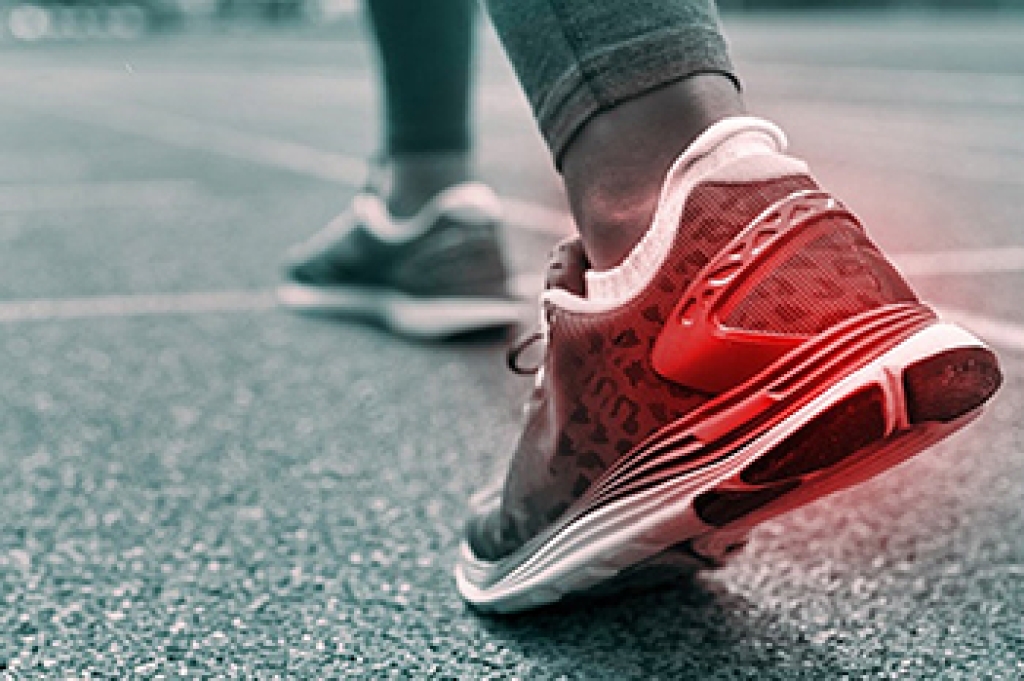
Running shoes are more than a comfort choice. The right pair supports your feet while matching your running style and surface. Wearing shoes that do not fit properly or match your activity can contribute to foot and ankle injuries. Common problems include blisters, arch pain, and stress injuries. Symptoms may begin as soreness after running and become persistent. Runners who increase mileage quickly or have foot mechanics concerns may face greater risk. Worn-out shoes can reduce cushioning and stability.
Choosing running shoes starts with considering where you run. Paved paths are firm, so road-running shoes with cushioning and a stable base can provide suitable support. Hard-packed dirt requires traction and durable construction. Trail-running shoes are designed for uneven terrain and offer traction, protection, and stability. Additionally, cross-training shoes work well for gym workouts involving lateral movement or strength exercises, but they may not provide enough cushioning for distance running. A proper fit should allow comfortable toe movement without heel slipping.
If pain develops, a podiatrist can evaluate your feet, shoes, and walking pattern. Treatment depends on the injury and may include activity modification, wearing supportive footwear, or targeted care. The podiatrist may recommend replacing worn shoes and adjusting training surfaces. A gradual return can help symptoms improve. For significant injuries, diagnostic imaging may determine whether a tendon, ligament, or joint has been affected. Early evaluation can prevent a problem from becoming longer lasting.
The best running shoe should match your foot needs, training activities, and surface. Pay attention to comfort, fit, and signs of wear. Replace shoes when support declines rather than waiting for pain. If foot or ankle pain develops while wearing the wrong running shoes, it is suggested that you consult a podiatrist for effective relief tips, and additional guidance on how to choose running shoes that are right for you.
If you are a runner, wearing the right running shoe is essential. For more information, contact Keleigh Muxlow, DPM from Colorado. Our doctor can provide the care you need to keep you pain-free and on your feet.
Choosing the Right Running Shoe for Your Foot Type
To increase performance and avoid the risk of injury, it is important to choose the right running shoe based on your foot type. The general design of running shoes revolves around pronation, which is how the ankle rolls from outside to inside when the foot strikes the ground.
- Neutral runners are able to choose from a wide variety of shoes, including minimalist shoes or even going barefoot.
- Runners who overpronate, or experience an over-abundance of ankle rolling, should choose shoes that provide extra motion control and stability.
- Runners who underpronate, or supinate, have feet that have high arches and lack flexibility, preventing shock absorption. They require shoes with more flexibility and cushion.
If you have any questions, please feel free to contact our office located in Littleton, CO . We offer the newest diagnostic and treatment technologies for all your foot care needs.
